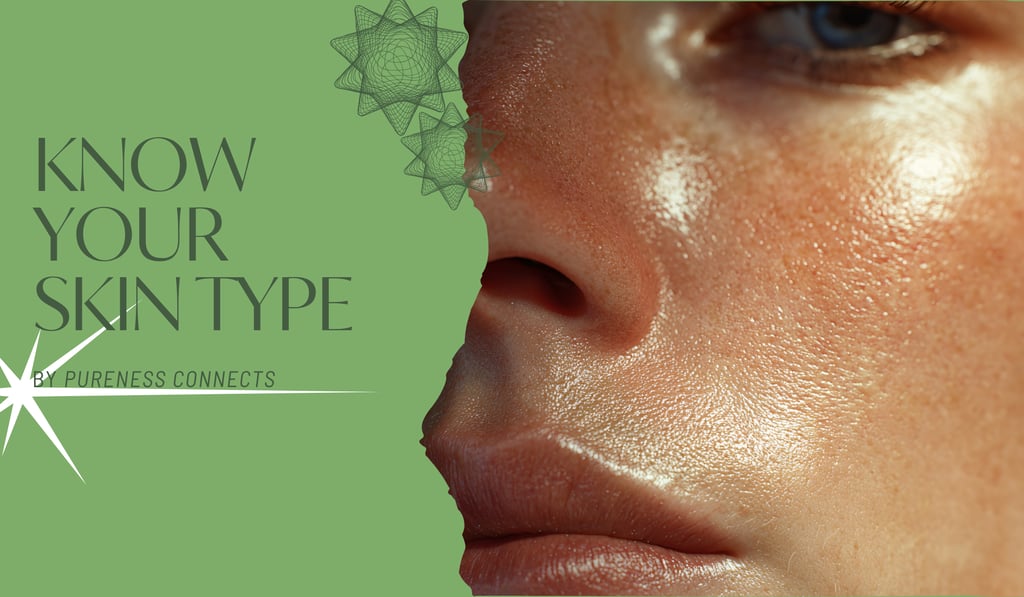
What Skin Types are There and How to Identify Yours: An Ultimate Guide
by Pureness Connects
2 min read
Hi there!
If you’re interested in skincare, you’ve probably heard about different skin types: dry, oily, combination, sensitive. But how do you know which type you are? And why is it even important? In this article, I’ll explain it all in a simple and friendly way.
🌸 What is a “skin type” anyway?
Your skin type refers to the natural characteristics of your skin, such as the amount of natural oils (sebum), moisture, elasticity, and sensitivity. These traits affect how your skin behaves and reacts to products and environmental factors.
🌸 How to Determine Your Skin Type
There are a few simple ways to figure out your skin type:
1. The “Observe and Wait” Method
Step 1: Wash your face with a gentle cleanser and pat dry.
Step 2: Wait 30 minutes without applying any products.
Step 3: Observe your skin:
If your skin looks shiny and oily, you likely have oily skin.
If your skin feels tight, flaky, or dry, you likely have dry skin.
If your skin is oily in the T-zone (forehead, nose, chin) but dry on the cheeks, you likely have combination skin.
If your skin feels balanced, neither oily nor dry, you likely have normal skin.
2. The Blotting Paper Test
Step 1: Wash and pat your face dry.
Step 2: Wait 30 minutes.
Step 3: Gently press a blotting paper onto different areas of your face:
If the paper picks up a lot of oil from everywhere, you probably have oily skin.
If it picks up oil only in some areas, you probably have combination skin.
If it picks up little or no oil, you likely have dry or normal skin.
🌸 Skin Types and Their Characteristics
1. Dry Skin
Characteristics: Often feels tight, flaky, may show redness or fine lines.
Causes: Low oil production, external factors like cold weather or harsh cleansers, eczema
Care Tips: Use moisturizers with glycerin, hyaluronic acid, and ceramides. Avoid harsh cleansers (alcohol-based or strong chemical exfoliants)
2. Oily Skin
Characteristics: Shiny skin, especially in the T-zone, large pores, prone to acne.
Causes: Excess oil production, hormonal changes, stress.
Care Tips: Use cleansers with salicylic acid, light moisturizers, and oil-free products.
3. Combination Skin
Characteristics: Oily T-zone with dry or normal cheeks.
Causes: Genetics, hormonal fluctuations.
Care Tips: Use products suited for different areas, such as lighter cleansers and moisturizers.
4. Sensitive Skin
Characteristics: Reacts with redness, burning, or itching to various products or environmental factors.
Causes: Genetics, pollution, stress, irritating ingredients.
Care Tips: Use hypoallergenic, fragrance-free products. Avoid harsh ingredients. Add soothing ingredients like aloe vera or niacinamide.
5. Normal Skin
Characteristics: Balanced skin, not too oily or dry, generally healthy appearance.
Causes: Genetics, good skincare routine.
Care Tips: Maintain your routine and keep your skin hydrated and protected. Seasonal adjustments can help maintain hydration in winter and oil control in summer.
🌸 Why Knowing Your Skin Type Matters
Knowing your skin type helps you:
Choose the right products: Not every product works for every skin type. Dry skin needs more hydration, while oily skin may need oil-regulating products.
Prevent irritation: Using the wrong products can worsen problems or irritate skin.
Be more effective: The right products and routine improve the appearance and health of your skin.
Knowing your skin type is the foundation of proper skincare. If you’re unsure, consult a dermatologist or esthetician who can help you identify your skin type and recommend the right products. Some links in this post are affiliate links, which means I might earn a small commission at no extra cost to you. Thanks for supporting my blog!