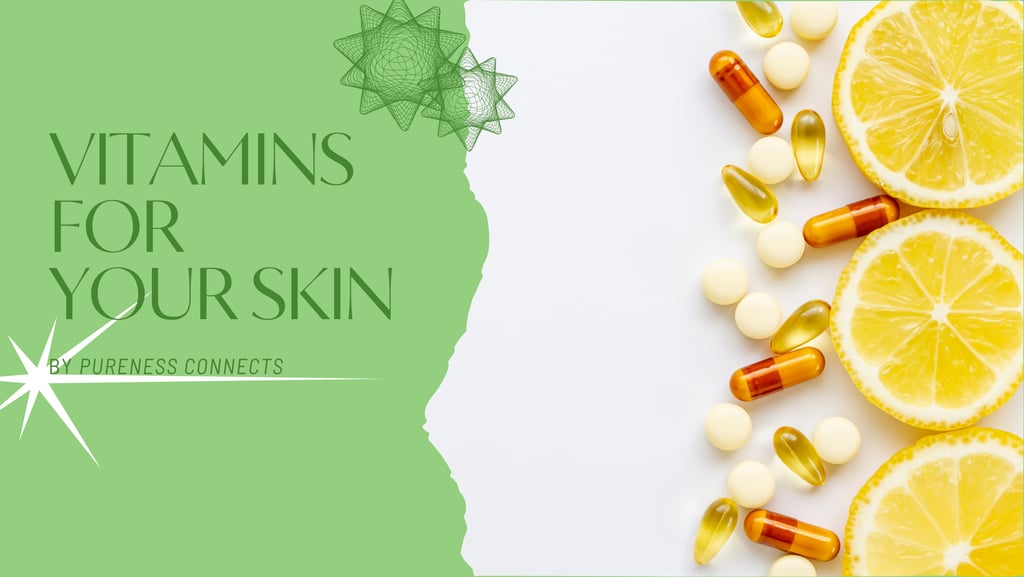
Vitamins That Transform Your Skin: A Complete Guide
Discover how vitamins A, C, E, D, and B support collagen, hydration, and skin repair. Tips, benefits, and top skincare picks included! by Pureness Connects
4 min read
Your skin isn’t just a canvas; it’s a living, breathing organ. And like any organ, it needs nutrients to function optimally. Vitamins aren’t just for your diet — they are essential for healthy, glowing skin, and can help with issues like acne, dryness, fine lines, and uneven tone.
If you’ve ever wondered whether a vitamin serum or supplement is worth it, this guide is for you. I’ll walk you through the most important vitamins for skin, explain how they work, give you practical usage tips, and highlight some of my favorite products.
🌸 Why Vitamins Are Different From Other Skincare Ingredients
Skincare actives like retinol, hyaluronic acid, or peptides target specific processes: hydration, cell turnover, or collagen synthesis. Vitamins, on the other hand, often work holistically, affecting multiple pathways simultaneously:
Vitamin A regulates cell turnover and can reduce acne.
Vitamin C fights free radicals, brightens, and supports collagen.
Vitamin E strengthens the skin barrier and protects from oxidative stress.
Vitamin D helps regulate skin immunity and repair.
Vitamin K can support microcirculation and reduce dark circles.
Unlike a single-target active, vitamins can both prevent and repair damage, making them versatile cornerstones of any skincare routine.
🌸 The Most Important Vitamins for Skin
1. Vitamin A (Retinoids and Retinol)
What it does:
Stimulates collagen and elastin production
Accelerates cell turnover
Reduces acne and fine lines
How to use:
Topical retinol creams or serums, gradually increasing strength
Use at night; always pair with SPF in the morning
Retinoids are the most studied vitamin for anti-aging. Clinical trials consistently show improvements in wrinkles, pigmentation, and skin texture over weeks to months.
Tip: Start slow (twice per week) and build tolerance to avoid irritation.
2. Vitamin C (Ascorbic Acid)
What it does:
Potent antioxidant, fights free radicals from UV and pollution
Boosts collagen synthesis
Brightens dark spots and evens skin tone
Forms to look for: L-ascorbic acid (most effective), magnesium ascorbyl phosphate (more stable, gentle)
(Check out my latest blog post, where I dive deeper into Vitamin C and its benefits for your skin. ✨)
How to use:
Apply in the morning after cleansing, before moisturizer
Combine with SPF for maximum protection
Beginner Tip: Consider a serum with 10–20% vitamin C for daily use like this one - https://amzn.to/49AyP9h.
3. Vitamin E (Tocopherol)
What it does:
Neutralizes free radicals
Strengthens the skin barrier
Improves hydration and reduces inflammation
Usage:
Often combined with vitamin C to enhance antioxidant effects
Found in oils, creams, or serums
Topical vitamin E reduces UV damage and accelerates skin healing in combination with other antioxidants.
4. Vitamin D
What it does:
Supports skin immunity and repair
Reduces inflammation and may help with acne or eczema
Important for barrier function
How to use:
Synthesized via sunlight (limited UV exposure recommended)
Oral supplements for deficiency (consult a doctor)
Vitamin D receptors in skin regulate cell growth, differentiation, and repair, making it essential for healthy skin.
5. Vitamin K
What it does:
Supports proper blood clotting and microcirculation
May reduce dark circles, bruising, and spider veins
How to use:
Topical creams for delicate eye areas
Supplements for systemic support
Some clinical studies show improvements in periorbital dark circles and post-procedure bruising when using vitamin K topically.
🌸 Other Skin-Boosting Vitamins to Know
Vitamin B3 (Niacinamide): Improves barrier function, reduces redness, evens skin tone
Vitamin B5 (Pantothenic Acid): Moisturizing and anti-inflammatory
Vitamin B7 (Biotin): Supports healthy hair, nails, and skin (deficiency rare but can cause dryness or rashes)
Try B-Complex — a blend of B vitamins for energy, skin, hair, and nails - https://amzn.to/49EUIme.
🌸How to Include Vitamins in Your Routine
Topical serums & creams: Targeted application for higher concentrations and faster results.
Dietary sources: Vitamins in whole foods support skin from the inside out. Examples:
Vitamin A → Carrots, sweet potatoes, spinach
Vitamin C → Citrus fruits, bell peppers, strawberries
Vitamin E → Almonds, sunflower seeds, avocado
Supplements: Useful if your diet is lacking, but always check with a healthcare professional.
Example Routine:
Morning: Cleanser → Vitamin C Serum → Moisturizer → SPF
Evening: Cleanser → Retinol (Vitamin A) → Vitamin E Cream → Moisturizer
🌸 Benefits of Vitamins: A Closer Look
Anti-Aging
Vitamin A (retinoids) and C stimulate collagen and elastin
Reduce fine lines, wrinkles, and sagging
Brightening
Vitamin C inhibits melanin production, improving hyperpigmentation
Niacinamide evens skin tone
Hydration & Barrier Support
Vitamin E and B5 strengthen the barrier, lock in moisture, and reduce transepidermal water loss
Acne & Inflammation
Vitamin A regulates cell turnover to prevent clogged pores
Vitamin D and B3 reduce inflammation and redness
Protection from Environmental Damage
Vitamins C and E act as antioxidants to combat UV and pollution damage
Topical antioxidants can complement sunscreen for cumulative protection
🌸 Scientific Evidence & Clinical Studies
Here are credible sources linked for each of the vitamin‑skin benefit statements (click on the headline to read the full study ✨):
· Retinoids (Vitamin A): Numerous studies show significant wrinkle reduction and improved texture over 12–24 weeks.
· Vitamin C: Clinical trials demonstrate antioxidant protection, increased collagen synthesis, and reduction of pigmentation.
· Vitamin E: Topical tocopherol reduces UV‑induced erythema and accelerates healing.
· Vitamin D: Research shows vitamin D receptors in skin cells regulate repair and barrier function.
· Niacinamide (Vitamin B3): Studies confirm reduced redness, improved barrier function, and fewer blemishes.
Vitamins are versatile, science-backed, and essential for healthy skin. They support repair, protect against environmental stress, hydrate, and fight signs of aging. Unlike single-function actives, vitamins work on multiple levels, giving your skin long-term resilience and glow.
Try this multivitamin (https://amzn.to/3NM0ivQ) enriched with spirulina, chlorella, and mushroom extracts — a next-level supplement that goes beyond basic vitamins.
Whether through topical serums, diet, or supplements, including vitamins in your skincare and wellness routine is a smart, research-supported strategy for healthier, happier skin. Some links in this post are affiliate links, which means I might earn a small commission at no extra cost to you. Thanks for supporting my blog!